

Commercial Cleaning for Small Businesses in Chester, VA: A Complete Guide
Chester occupies a unique position in Chesterfield County’s commercial landscape. It’s not the corporate corridor of the county’s western developments, and it’s not the dense suburban commercial strip of the northern municipalities. Chester has its own character — a mix of long-established local businesses, growing professional services, healthcare providers, and the kind of small business ecosystem that has expanded steadily alongside the residential growth the area has seen over the past decade.
For small business owners in Chester, that community character is both an asset and a responsibility. Your clients are often your neighbors. Your reputation travels quickly through a tight-knit local network. And the condition of your commercial space — whether it’s a professional office on Route 10, a medical suite near the Chester Village corridor, or a retail operation serving the local community — communicates something specific about how you run your business before a single conversation takes place.
This guide is written specifically for Chester small business owners who are either establishing a commercial cleaning program for the first time, evaluating whether their current cleaning arrangement is actually working, or trying to understand what professional commercial cleaning should look like for an operation of their size. It covers what small businesses specifically need from a cleaning vendor, how to evaluate options in the Chester market, and how to structure a program that delivers consistent results without overcomplicating a straightforward operational need.
What Does Commercial Cleaning for Small Businesses in Chester Actually Involve?
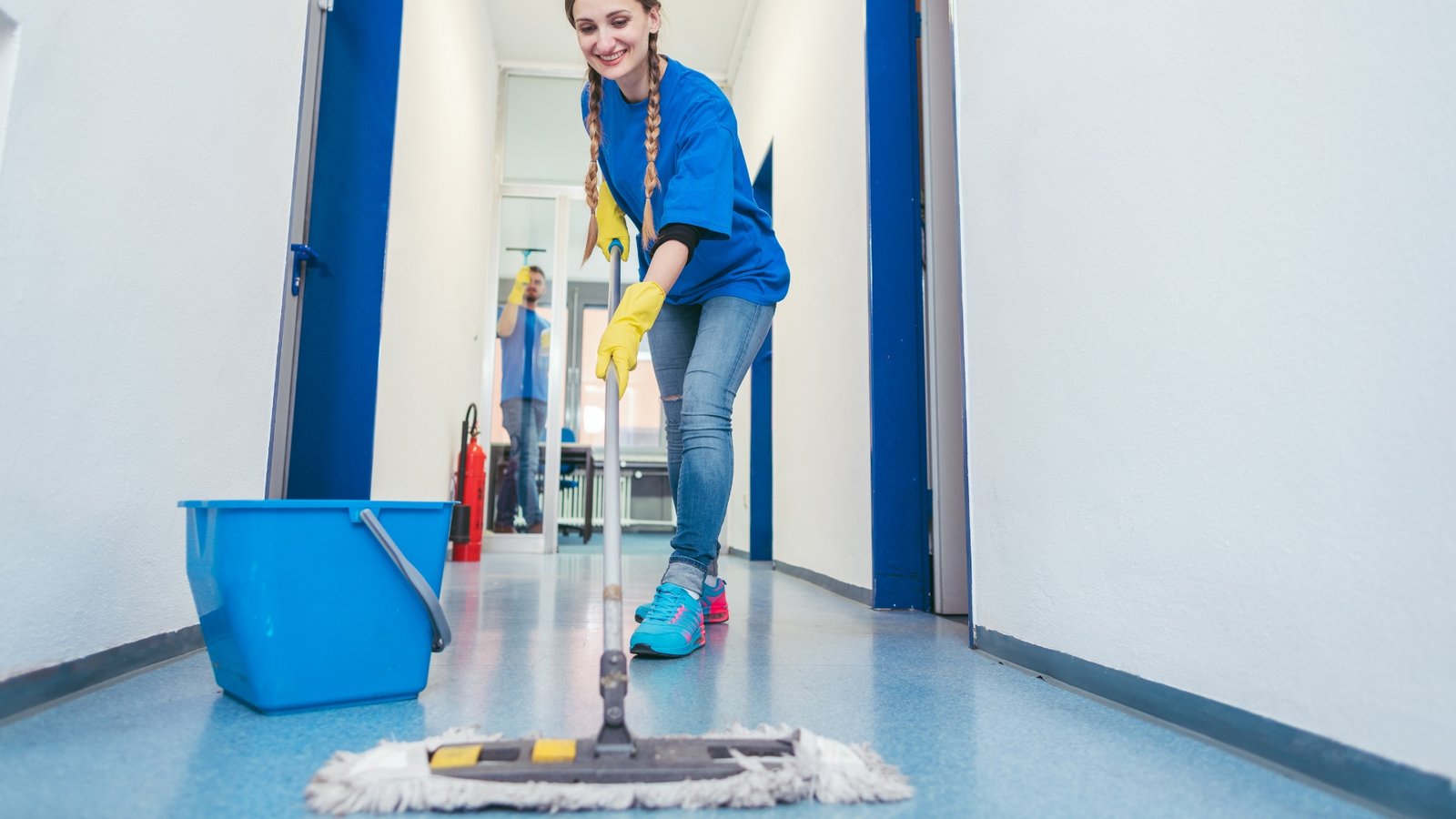
Commercial cleaning for small businesses in Chester encompasses professional janitorial and cleaning services tailored to the scale, schedule, and budget of operations typically employing fewer than fifty people. This includes recurring maintenance cleaning of office, retail, or service environments — restroom sanitation, floor care, high-touch surface disinfection, trash removal, and common area upkeep — structured around the specific needs and operating hours of each business rather than the standardized programs designed for large corporate accounts.
Why Small Businesses in Chester Have Different Cleaning Needs Than Larger Operations
The commercial cleaning industry is largely structured around mid-to-large accounts — office complexes, healthcare systems, retail chains, and multi-tenant buildings where the cleaning scope is significant and the contract value justifies the overhead of complex service management. Small businesses don’t fit neatly into that model, and the frustration many Chester small business owners have with commercial cleaning vendors often comes directly from being treated as a scaled-down version of a large account rather than as a distinct client type with genuinely different needs.
Here’s what makes small business cleaning in Chester specifically different.
Scope is tighter but standards are equally high. A two-person professional office doesn’t need the same labor hours as a ten-thousand square foot corporate floor, but it needs the same standard of cleanliness — particularly in client-facing areas where a single oversight is immediately visible. Small scope doesn’t mean low standards.
Scheduling flexibility matters more. Small businesses often have less predictable operating hours, occasional after-hours events, and seasonal variations in traffic and use that require a cleaning vendor capable of adapting rather than rigidly adhering to a fixed program. A Chester cleaning company working with small business clients needs to treat scheduling as a conversation, not a constraint.
Budget consciousness is a real factor. Small businesses operate with tighter margins than large accounts, which means cleaning program design needs to be thoughtful about what’s included at what frequency rather than defaulting to the most comprehensive package. The right program for a small Chester business delivers genuine value at a sustainable cost — not a stripped-down version of something designed for a much larger operation.
Relationship quality is more important. When a large corporation has a cleaning problem, they route it through a facilities manager who routes it through a vendor management process. When a small business owner in Chester has a cleaning problem, they want to talk to someone who knows their space and can address it directly. The relational dimension of the vendor relationship matters significantly more at small business scale.
The Real Cost of Inadequate Cleaning for Chester Small Businesses
Before getting into what professional commercial cleaning should look like, it’s worth being direct about what inadequate cleaning actually costs — beyond the obvious aesthetic concerns.
Client and Customer Perception
In Chester’s small business environment, client relationships are built on trust, familiarity, and the accumulated impression of professionalism across every interaction. The cleanliness of your space is part of that impression, and it operates below the level of conscious evaluation for most clients. People don’t typically think “this office is clean” when they walk into a well-maintained space. They simply feel more comfortable, more confident, and more positively disposed toward the business and the people running it.
The inverse is more explicit: a visibly neglected space — streaked bathroom fixtures, grimy floor corners, dusty surfaces in a waiting area, persistent odors in a breakroom — registers consciously and creates doubt. In a small business context where clients often have personal relationships with the owner, that doubt is particularly damaging because it introduces a cognitive dissonance between the person they trust and the environment that trust is associated with.
Employee Health and Retention
Chester’s small business labor market is competitive, and retaining good employees requires attention to workplace quality across multiple dimensions. A clean, well-maintained workspace signals that the business is professionally run and that leadership invests in the environment employees work in every day. An unkempt space signals the opposite — and in a small team where everyone knows each other, the message that the owner doesn’t prioritize workplace conditions can affect morale out of proportion to the cleaning issue itself.
Beyond morale, the health argument is straightforward. Small teams are more vulnerable to illness spread than large ones because there’s less redundancy. When two out of five employees are sick simultaneously, operations are genuinely impaired. Regular professional disinfection of high-touch surfaces — a core component of commercial cleaning in Chester — reduces illness transmission in ways that translate directly to operational continuity.
Liability and Compliance
Depending on your business type, inadequate cleaning can create liability exposure beyond the reputational. Healthcare-adjacent businesses, food service operations, and businesses serving vulnerable populations have cleaning standards that carry regulatory weight. Even for standard professional offices, slip-and-fall liability in poorly maintained entry areas or restrooms is a genuine concern. A documented professional cleaning program is a meaningful component of a liability management posture for businesses of any size.
Types of Small Businesses in Chester That Need Professional Cleaning
Chester’s commercial landscape spans a range of business types, each with specific cleaning considerations worth understanding before structuring a program.
Professional Service Offices
Law offices, accounting firms, financial advisors, insurance agencies, and similar professional service businesses in Chester serve clients who arrive with high expectations and evaluate the environment carefully. Waiting areas, conference rooms, and private offices all need consistent attention because client-facing interactions happen in them regularly. Restrooms in professional offices receive less traffic than retail environments but are held to equally high standards by the clients who use them.
For these businesses, commercial cleaning in Chester should prioritize consistency above all else — the same standard every visit, reliable scheduling that ensures the office is always clean before client-facing hours, and attention to the specific details that professional clients notice: fixture condition, floor presentation, glass and mirror cleanliness, and restroom odor control.
Medical and Healthcare-Adjacent Businesses
Chester has a growing healthcare services presence, with medical practices, dental offices, physical therapy providers, and similar businesses serving the local community. These environments have cleaning requirements that go beyond aesthetic standards into genuine sanitation and infection control territory.
Patient-facing areas require disinfection protocols that address pathogen transmission specifically — not just cleaning products that make surfaces look clean, but EPA-registered disinfectants applied with appropriate dwell times to surfaces that patients contact. Waiting areas with shared seating, check-in counters, restrooms, and treatment areas all require systematic disinfection that a well-structured commercial cleaning program should explicitly address.
For Chester healthcare businesses evaluating cleaning vendors, the ability to articulate and document specific disinfection protocols is a baseline requirement. A vendor that can’t speak specifically to pathogen control in healthcare-adjacent environments isn’t equipped for this business type regardless of how well they perform in standard office settings.
Retail and Personal Service Businesses
Retail shops, salons, boutiques, and personal service businesses in Chester create environments where cleanliness is part of the product. Clients come in, spend time in the space, and form judgments about the business based on their sensory experience — what they see, what they smell, and how surfaces feel when they touch them. A salon with grimy station surfaces or a boutique with dusty shelving communicates poor standards in a category where standards are the entire point.
Retail cleaning needs are also shaped by foot traffic patterns that are harder to predict than office environments. A Chester retail business that has a slow Wednesday and a busy Saturday needs a cleaning program that accounts for both — maintaining the space through slower periods and addressing the higher post-weekend accumulation before the next week begins.
Restaurants and Food Service
Food service environments have the most demanding commercial cleaning requirements of any business category, with health code compliance adding a regulatory layer that makes professional cleaning a legal necessity as much as a business choice. Grease management, kitchen surface sanitation, dining area maintenance, and restroom standards all require systematic professional attention that cannot be reliably handled by kitchen staff at the end of service.
For Chester food service businesses, the commercial cleaning program needs to integrate with health code requirements and inspection schedules — with documentation available to demonstrate compliance when needed.
Fitness and Wellness Businesses
Gyms, yoga studios, physical therapy practices, and wellness businesses in Chester face specific cleaning challenges related to high-touch equipment, shared surfaces, and the moisture environment created by physical activity. Equipment sanitation, floor care, locker room cleaning, and restroom maintenance all require particular attention in these environments. Client expectations around cleanliness in wellness settings are also elevated — people are acutely aware of hygiene in spaces connected to their physical health.
What a Well-Structured Small Business Cleaning Program Includes
The right cleaning program for a Chester small business is built around three components: a defined scope that matches your space and business type, a frequency that keeps the space consistently maintained, and accountability mechanisms that ensure the program actually delivers what it promises.
Defining Your Scope
For most small professional offices in Chester, a complete recurring cleaning scope covers the following:
Common Areas and Reception Floor vacuuming and mopping, surface dusting and wiping, glass and mirror cleaning, trash removal and liner replacement, and high-touch surface disinfection — door handles, light switches, reception counter, shared equipment.
Private Offices and Workspaces Trash removal, desk and surface dusting (working around personal items), floor vacuuming, and disinfection of shared or high-touch equipment.
Restrooms Complete toilet cleaning including bowl, seat, lid, exterior, and base, sink and faucet scrubbing, mirror cleaning, floor mopping, restroom surface disinfection, supply restocking, and odor control. Restrooms are the highest-scrutiny area in any commercial space and should receive the most systematic attention in your cleaning scope.
Kitchen and Breakroom Countertop cleaning and sanitizing, appliance exterior wiping, sink scrubbing, microwave interior cleaning, floor mopping, and trash removal.
Periodic and Deep Cleaning Components Beyond the recurring maintenance scope, a complete small business cleaning program should include periodic deep cleaning of floor surfaces — stripping and waxing hard floors, carpet extraction — along with detailed restroom grout work, interior window cleaning, vent cover cleaning, and refrigerator interior cleaning on a scheduled quarterly or semi-annual basis.
Determining the Right Frequency
Cleaning frequency for Chester small businesses should reflect actual traffic volume and use patterns rather than defaulting to an arbitrary schedule.
Daily cleaning is appropriate for businesses with significant daily client traffic, shared restrooms used by clients, food service elements, or healthcare environments where sanitation standards are elevated.
Three times per week works well for professional offices with moderate client traffic where restroom maintenance and general presentation are the primary concerns, but the volume doesn’t justify nightly service.
Twice per week is suitable for smaller professional offices with limited client visits and lower restroom load, where the primary need is consistent maintenance rather than intensive daily attention.
Weekly cleaning is a minimum for any commercial space — less frequent service allows buildup to accumulate in ways that affect both appearance and hygiene, and typically means each visit requires more remedial work than genuine maintenance cleaning.
A reputable Chester cleaning company will assess your specific space, traffic patterns, and business type before recommending a frequency — rather than defaulting to a standard package regardless of your situation.
How to Evaluate Commercial Cleaning Companies in Chester
The Chester and broader Chesterfield County market includes a range of commercial cleaning options, and identifying the right fit for a small business requires evaluating vendors on dimensions that go beyond price and initial impression.
Ask the Right Questions Before Committing
What’s your specific experience with businesses of my type and size? A vendor with a strong track record of large account management may not be well-suited to the relational, flexible approach small businesses need. Ask specifically about their small business client base and request references from similar operations.
How do you handle staff consistency on small accounts? For small business clients, staff rotation is particularly disruptive because there’s less operational buffer to absorb the inconsistency. Understand how the vendor approaches consistency as a commitment rather than an aspiration.
What does your quality control process look like? Ask for specifics — inspection protocols, client feedback processes, how issues are identified and addressed. Generic answers signal that quality control is reactive rather than systematic.
What are your insurance coverages, and can you provide certificates? General liability insurance and workers’ compensation are non-negotiable. Request certificates before signing any agreement, and verify that coverage levels are appropriate for your business environment.
How is your pricing structured, and what triggers additional charges? Understand exactly what’s included in your quoted rate and what would be billed as an add-on. Ambiguous pricing structures create friction and erode trust in the vendor relationship over time.
Evaluate Communication During the Sales Process
How a cleaning company communicates before you’re a client is the most reliable predictor of how they’ll communicate after. Response time to inquiries, clarity of answers to specific questions, willingness to provide written scopes and documentation, and the overall professionalism of the engagement process all reflect the operational culture of the business.
Office janitorial services in Chester that treat the sales process as an opportunity to demonstrate their standards — rather than as an obstacle to getting the contract signed — are signaling something meaningful about how they operate.
Consider Local vs. National Franchise Options
Chester small business owners evaluating cleaning options will encounter both locally operated companies and national franchise operators. Each has legitimate strengths worth considering.
National franchises offer brand standardization, established systems, and in some cases broader insurance coverage and operational infrastructure. Their weakness for small business clients is often in the relational dimension — you’re a small account in a large system, and getting responsive, personalized service can be challenging.
Local operators with strong community roots in Chester and Chesterfield County have more direct accountability to their local reputation, often provide more consistent staff assignment for smaller accounts, and can offer the kind of flexible, relationship-oriented service that small businesses benefit from. Their weakness is variability — a well-run local operation can be excellent, while a poorly run one lacks the infrastructure to deliver consistent quality.
Evaluating the specific operator — their tenure in the market, their client references, and their demonstrated accountability practices — matters more than the franchise versus independent distinction in isolation.
Structuring Your Cleaning Contract: What Chester Small Businesses Should Know
The commercial cleaning contract is where the promises made during the sales process become legally defined commitments. Small business owners often sign these agreements without fully understanding their implications — and then find themselves locked into unsatisfactory arrangements without clear exit options.
Key Contract Elements to Review
Scope of work specificity. The contract should attach or reference a detailed scope of work that specifies every area covered, how frequently, and to what standard. Vague language like “all common areas” without specific definition gives the vendor too much interpretive latitude.
Term length and exit provisions. Many commercial cleaning contracts include auto-renewal clauses and early termination penalties that small business owners don’t notice until they want to make a change. Understand the contract term, what happens at renewal, and what it costs — financially and procedurally — to exit the agreement if the service isn’t performing.
Performance standards and remediation process. The contract should define what happens when service falls short — specifically, the timeline for response to complaints and the remedy available (re-clean, credit, etc.). Vague satisfaction guarantees without defined remediation processes are difficult to enforce.
Insurance requirements. Verify that the contract requires the vendor to maintain specified insurance coverages and notify you of any changes or lapses. Some contracts specify minimum coverage levels that may not actually be adequate for your business environment.
Pricing and rate adjustment terms. Understand under what circumstances rates can be adjusted during the contract term, how much notice is required for rate changes, and whether there are caps on annual increases.
The True Cost Comparison: Professional Cleaning vs. Internal Handling
Many Chester small businesses that haven’t yet established a professional cleaning program are managing cleaning internally — through staff rotation, a designated part-time employee, or owner-managed cleaning on evenings or weekends. Understanding the true cost comparison between this approach and professional service is worth doing before concluding that internal management is the more economical option.
The direct cost of internal cleaning management includes the labor time of whoever is doing the cleaning — valued at their actual hourly rate, not at a hypothetical minimum wage assumption. A professional employee spending two hours per week on cleaning tasks is costing the business their actual hourly compensation for those two hours, plus any opportunity cost of work not being done during that time.
The indirect costs are less visible but equally real: cleaning supplies and equipment that the business purchases and maintains, the liability exposure from untrained cleaning rather than professionally executed service, and the morale impact of asking skilled employees to perform cleaning tasks outside their job description.
When these factors are calculated honestly, professional business cleaning services in Chester are frequently more cost-effective for small businesses than internal management — particularly when the quality differential is factored in. Professional cleaners work faster, clean more thoroughly, and bring equipment and products that produce better results than improvised internal approaches.
Getting Started with Commercial Cleaning in Chester
The process of establishing a commercial cleaning program doesn’t have to be complex or time-consuming. For most Chester small businesses, the path from inquiry to first clean involves three straightforward steps: a walkthrough of your space with a vendor who understands small business cleaning needs, a clearly scoped proposal that matches your space and budget, and a contract that defines mutual commitments explicitly.
The most important factor in making this work long-term is treating the vendor relationship as exactly that — a relationship rather than a transaction. The cleaning companies that consistently serve Chester small businesses well over time are those that know their clients’ spaces, understand their priorities, and maintain accountability as a genuine operational standard rather than a marketing claim.
Clockwork Cleaning provides office cleaning services in Chester built specifically around the needs of small and mid-sized businesses in Chesterfield County. Whether you’re establishing your first professional cleaning program, replacing a vendor that hasn’t been meeting your standards, or structuring a cleaning schedule around a new commercial space, the process starts with a straightforward conversation about your business, your space, and what consistent professional cleaning should look like for your operation.
Reach out to Clockwork Cleaning today to request a commercial cleaning quote for your Chester business — and get a program designed around your actual needs rather than a template built for someone else’s.